
- | 2:30 pm
PM assures quick justice on paper leaks but protesters want Pradhan to quit
The prime minister’s first direct intervention failed to satisfy protesters demanding the education minister’s resignation, examination reform and accountability for the police crackdown in Delhi.
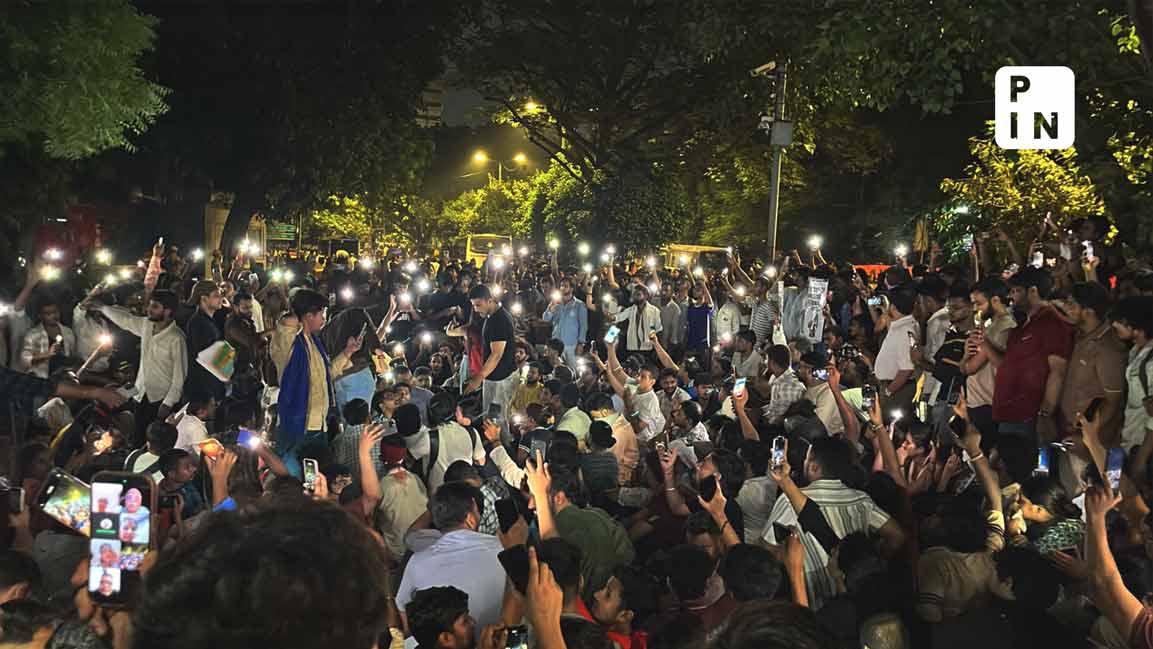


Prime Minister Narendra Modi on Thursday, 23 July, announced fast-track courts for examination paper-leak cases, making his first public intervention in a youth-led protest movement that has spread beyond Delhi and drawn the opposition into a widening confrontation with the government.
“Nothing is more important than the welfare and future of our youth,” Modi said in a post on X.
He said the courts would ensure “swift and stringent punishment” for people involved in paper leaks and warned that anyone seeking to harm students’ futures would not be spared.
Nothing is more important than the welfare and future of our youth!
We have decided to set up fast-track courts to ensure swift and stringent punishment for those involved in paper leaks. Have directed the concerned authorities and officials to take all necessary steps in this…
— Narendra Modi (@narendramodi) July 23, 2026
The announcement addressed one of the protesters’ concerns but left their central demand untouched.
The Cockroach Janta Party, or CJP, which has led the agitation, responded with a renewed call for education minister Dharmendra Pradhan to resign.
CJP founder Abhijeet Dipke said the demonstrations would continue until Pradhan stepped down.
“It has been 25 days so far. Even if it takes 25 months, that is acceptable, but we will not move from here,” Dipke told protesters at Jantar Mantar late Wednesday.
The protesters are also seeking changes to the examination system, compensation for the families of students who died by suicide following reported paper leaks and accountability for police action during demonstrations this week.
Protesters Return After Overnight Clashes
Thousands of demonstrators remained at or returned to Jantar Mantar on Thursday despite barricades and restrictions across central Delhi.
The Delhi Metro Rail Corp. (DMRC) suspended entry and exit at 16 stations from Thursday morning, including Rajiv Chowk, Janpath, Patel Chowk, Central Secretariat, Mandi House, ITO and Supreme Court.
Trains continued to pass through the affected stations, while interchange services remained available at Rajiv Chowk, Mandi House and Central Secretariat.
The closures disrupted access to the Supreme Court, prompting Chief Justice Surya Kant to say he would intervene if the problem was not resolved by lunchtime.
DMRC later said all stations had reopened for passenger services.
Protest organizers also alleged that mobile internet services had been disrupted around Jantar Mantar. No official order confirming a fresh telecom suspension on Thursday had been made public, however, and the claim could not be independently verified.
Barricades, police checks and restricted access also slowed movement around Jantar Mantar, Parliament Street and adjoining parts of Connaught Place. The disruption was concentrated in central Delhi rather than across the capital.
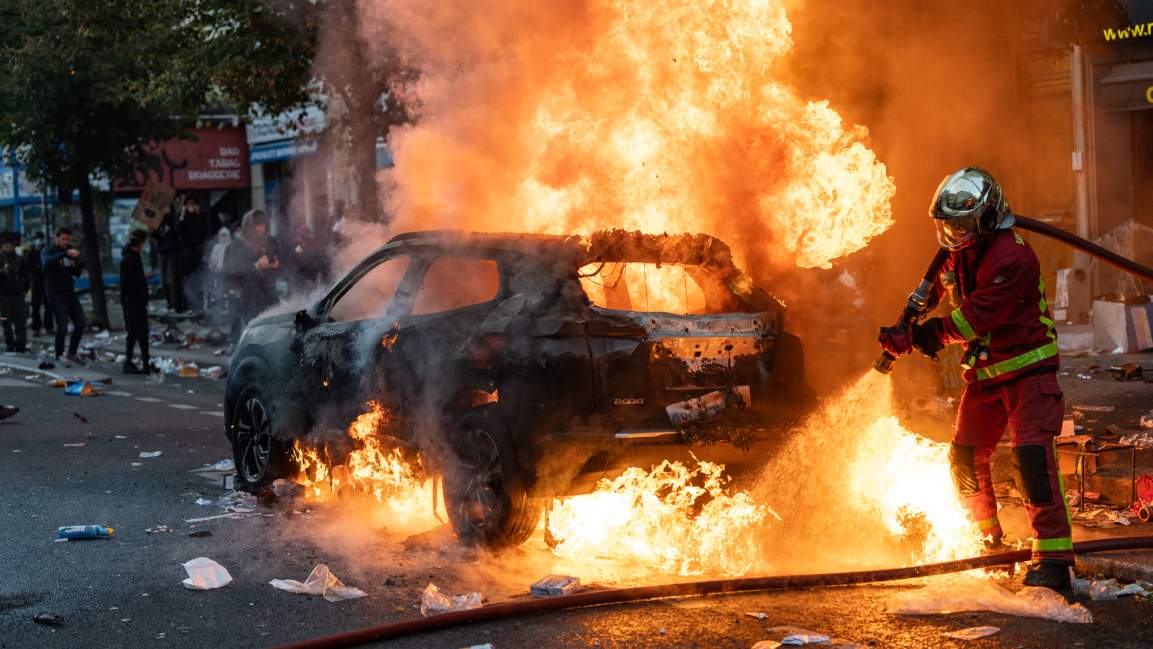
The latest gathering followed clashes late Wednesday, when police used tear gas and batons to push back crowds. Local media estimated that more than 10,000 people had assembled at Jantar Mantar during the evening.
Delhi Police said some protesters threw stones and plastic bottles, injuring several officers who were taken to hospital, according to ANI. Protesters and opposition leaders accused the police of using excessive force.
The confrontation followed a larger march on Monday, when tens of thousands of demonstrators attempted to move towards Parliament. Police used tear gas and batons after protesters crossed barriers and defied restrictions.
What Began the Protests
The agitation grew out of allegations of leaks and irregularities in highly competitive examinations, including the national medical entrance examination. The disputed examination affected about two million candidates.
For students who spend years preparing for a limited number of medical college and government positions, a leak can erase the value of their rank, preparation and money spent on coaching.
The controversy has therefore moved beyond the handling of one examination and raised broader questions about whether public recruitment and education systems offer candidates a fair contest.
The protest movement began as an online satire campaign in May before moving onto the streets in June. Its irreverent name and use of memes helped it gain attention among younger social media users, but the gatherings have since drawn parents, professionals, established student organizations and people without formal political affiliations.
Supporters have kept the Delhi sit-in running by delivering food, water, medical supplies and other essentials. Volunteers have organized meals and basic care at the protest site, while contributions have arrived from people unable to attend in person.
Wangchuk’s Hunger Strike Raises Pressure
The demonstrations gained wider attention after climate activist Sonam Wangchuk joined the protest and began a hunger strike that lasted more than three weeks.
Police moved Wangchuk to a hospital over the weekend, citing his health. His removal became another rallying point for protesters, who accused the authorities of trying to weaken the movement rather than address its demands.
Wangchuk’s involvement helped bring the campaign beyond established student groups. The protests have increasingly come to represent grievances over unemployment, the scarcity of secure jobs and the pressure imposed by highly competitive entrance and recruitment examinations.
India has one of the world’s largest youth populations, but millions of people entering the workforce continue to compete for a limited pool of stable and well-paid positions.
The movement has consequently drawn support from people who see the examination controversy as part of a broader failure of accountability and economic opportunity.
Protests Spread Beyond Delhi
Demonstrations have also been held in Mumbai, Patna, Bengaluru, Kolkata and other cities.
In Mumbai, about 2,000 people gathered on Wednesday at locations including Shivaji Park in Dadar, Ambedkar Garden in Chembur and an area near the Indian Institute of Technology Bombay. Police detained some protesters and imposed restrictions around parts of the city.
A video of a woman standing in front of a police vehicle during the Mumbai protest circulated widely online. She was reported as saying that the treatment of students in Delhi was wrong. Another widely shared video appeared to show detained protesters getting out of a police van, which the CJP reposted with a joke about the escape.
Student and opposition groups have also organized demonstrations and solidarity events in Patna and other cities.
Parliament Remains Deadlocked
The controversy has also brought proceedings in Parliament to a halt.
Opposition lawmakers disrupted both Houses this week, demanding Pradhan’s resignation and a debate on examination leaks and the police response. The government has said it is willing to debate the issue and consider reforms, but the opposition has insisted that ministerial accountability must come first.
Congress leaders, including Rahul Gandhi and Priyanka Gandhi Vadra, were briefly detained after joining protests in Delhi. Rahul Gandhi also led a demonstration near Modi’s residence and has repeatedly called for Pradhan to be dismissed.
Responding to Modi on Thursday, Gandhi accused the prime minister of allowing the education system to be captured and damaged. He demanded that Modi apologize to students, remove Pradhan and punish those responsible for assaults on protesters.
Gandhi has claimed that 152 examination papers were leaked over the past decade without a single conviction. The government has disputed his account and accused him of spreading misinformation. Publicly available reporting has not established a common, independently verified figure covering examination authorities across the country.
Congress spokesperson Jairam Ramesh criticized Modi for responding on social media rather than addressing Parliament, saying the prime minister should participate in a full debate.
Bharatiya Janata Party (BJP) leaders have accused the opposition of exploiting student grievances and selectively targeting the government. BJP president J.P. Nadda has accused the Congress of selective outrage, while the government has offered talks and a parliamentary discussion.
Government Talks Fail to End Standoff
The government has held one round of talks with CJP representatives and assured them that their demands would be considered. It has also proposed examination reforms and offered a debate in Parliament.
Health minister J.P. Nadda has engaged with protest representatives, but CJP leaders have said further talks should take place publicly at the protest site rather than behind closed doors.
Pradhan has promised changes to the examination system, although his refusal to resign has kept the confrontation alive. Protesters argue that administrative reform without political accountability would allow those who oversaw the system to remain in place.
Modi’s fast-track court announcement raises practical questions. The government has not disclosed how many courts would be established, which cases they would hear, when they would begin operating or whether additional legislation and funding would be required.
Special courts can shorten proceedings by assigning judges and resources to a limited category of cases. Their effectiveness will also depend on how quickly investigators identify suspects, secure digital and financial evidence and prosecute the networks responsible for obtaining and selling examination papers.
Social Media Becomes a Second Protest Site
Social media has shaped the movement from its beginnings. CJP organizers have used memes, short videos and satirical posts to announce demonstrations, respond to government statements and circulate footage of police action.
After Modi’s announcement, the group repeated its demand that Pradhan resign. Dipke also shared a meme showing the education minister with the caption “Hi, my name is Nothing,” referring to Modi’s statement that nothing was more important than the welfare of young people.
https://t.co/mo44rK6tNc pic.twitter.com/kEeHWUMouF
— Abhijeet Dipke (@abhijeet_dipke) July 23, 2026
Actor and Film and Television Institute of India president R. Madhavan also issued a statement after students criticized his earlier silence and circulated “missing” posters and memes about him.
Madhavan said examination leaks damaged the hopes and hard work of students and their families. He called for a fair and transparent education system, strict action against those responsible and peaceful protest, while warning against efforts by vested interests to divert the campaign.
Images of police striking protesters, crowds facing tear gas and demonstrators being carried into police vehicles have been widely shared by news organizations, activists and opposition leaders.
The footage has helped turn what began as a dispute over an examination into a national argument about policing, accountability and the government’s relationship with young Indians.
More Top Stories: