- | 4:50 pm
Quad nations unveil Indo-Pacific monitoring plan
The four-nation grouping used the New Delhi meeting to move beyond diplomatic signaling with initiatives on ports, maritime surveillance, energy and critical minerals.
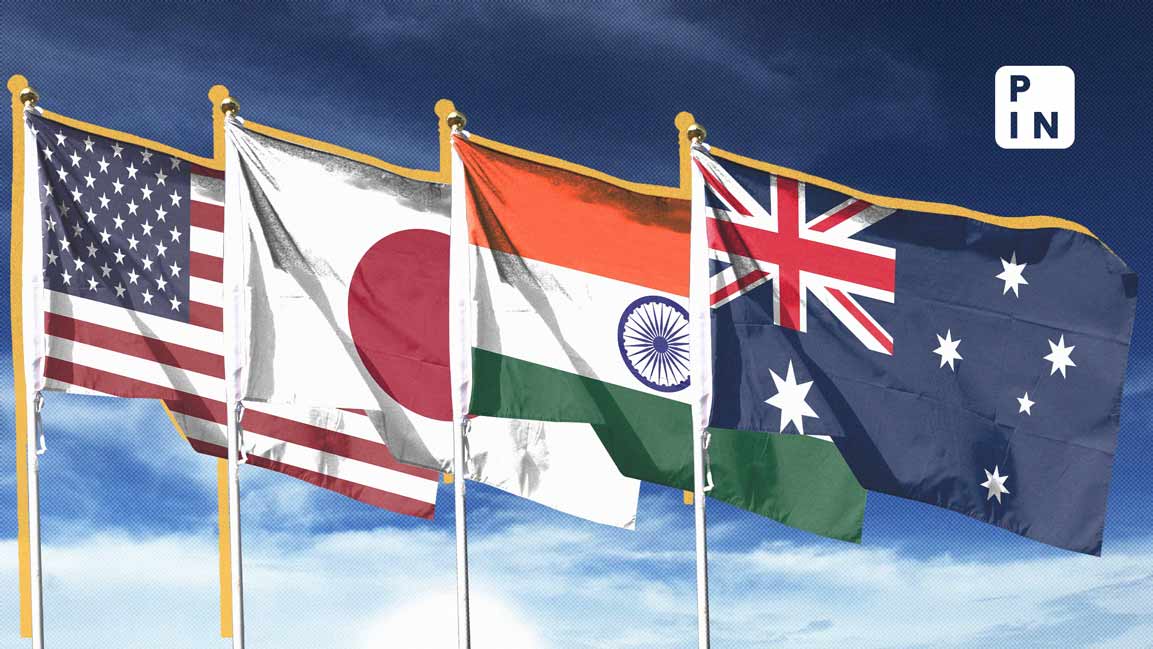


Foreign ministers from India, the US, Japan and Australia agreed on Tuesday to work with Fiji on port infrastructure and advance new cooperation on critical minerals, energy security and maritime surveillance, as the Quad sought to restore momentum after months of uncertainty over leader-level engagement.
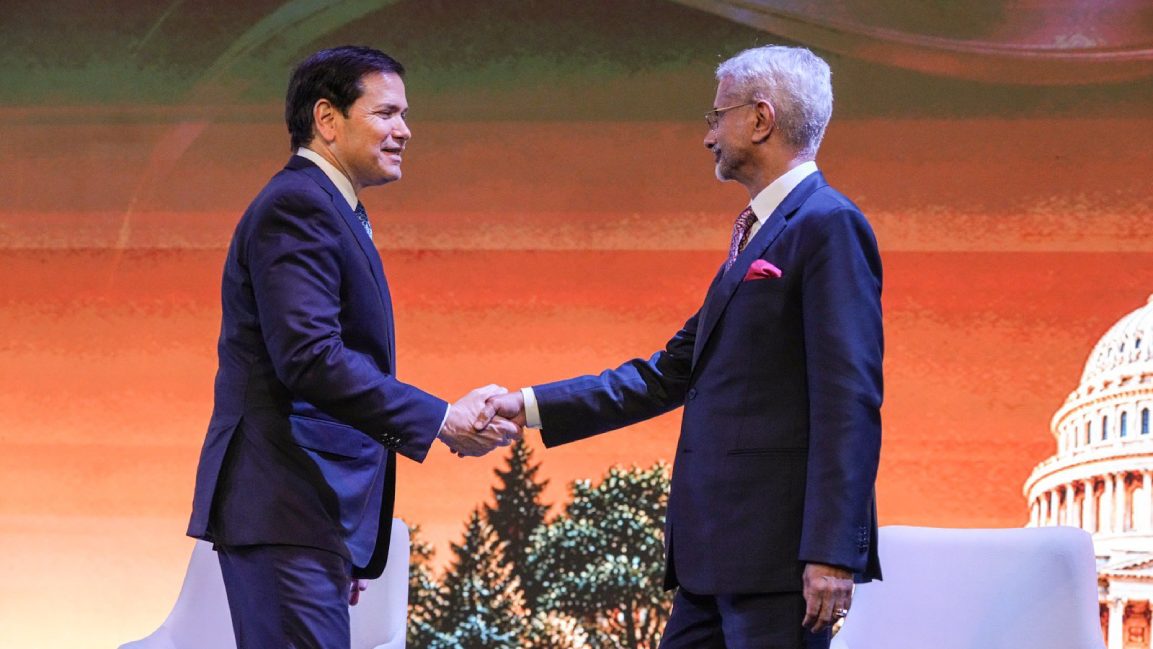
The meeting in New Delhi brought together external affairs minister S. Jaishankar, US secretary of state Marco Rubio, Japanese foreign minister Toshimitsu Motegi and Australian foreign minister Penny Wong.
It was the first Quad foreign ministers’ meeting of 2026 and the third since September 2024.
The Quad announced plans to work with Fiji to improve port infrastructure in the Pacific Islands.
Rubio said the initiative was aimed at addressing inadequate port capacity in the Pacific Islands.
The ministers also announced a Quad Critical Minerals Framework, an Indo-Pacific energy security initiative and a maritime surveillance cooperation initiative to improve information sharing across regional waters.
AP reported that the surveillance initiative is intended to integrate the four countries’ capabilities and strengthen real-time information sharing across the Indo-Pacific.
The measures mark an attempt to give the Quad a more concrete agenda at a time when analysts have questioned whether the group has lost momentum because a leaders’ summit was not held last year.
Reuters reported that the planned summit was delayed amid strains in US-India ties, including disagreements over tariffs, while Rubio said over the weekend that officials would work toward a leaders’ meeting later this year.
“We are deeply committed to this partnership. It is a linchpin and a cornerstone of our global strategy as a nation in the US,” Rubio said.
The New Delhi meeting also reflected how the Quad’s agenda has expanded from broad Indo-Pacific coordination into economic security, supply chains, ports, undersea cables, energy routes and critical technologies.
In a joint statement, the ministers said they met at a time of conflicts, geopolitical tensions and supply-chain strain, and reaffirmed support for a free and open Indo-Pacific based on international law, sovereignty and territorial integrity.
Jaishankar said after the meeting that the Quad’s maritime cooperation now covers surveillance, maritime domain awareness, logistics networks, undersea cables, training, capacity building and humanitarian assistance and disaster relief.
He said the ministers also discussed safe and unimpeded maritime commerce.
The critical minerals framework is likely to draw particular attention because of China’s dominant role in mineral processing and recent concerns over export restrictions affecting sectors such as semiconductors, aerospace and defense.
Rubio said the framework would guide the use of economic policy tools and coordinated investment to strengthen supply chains in mining, processing and recycling.
India and the US separately signed an agreement to strengthen cooperation on critical minerals. The deal comes as governments and companies seek more reliable supplies of minerals used in clean energy, electronics, defense systems and advanced manufacturing.
Energy security was another major focus. The ministers launched an Indo-Pacific energy security initiative aimed at strengthening regional fuel and energy supply chains. Rubio said the US would host a Quad fuel security forum later this year.
The discussion came as the ministers addressed the Middle East and the safety of shipping routes. The Quad statement stressed the importance of safe and uninterrupted commerce through the Strait of Hormuz and the Red Sea.
Reuters reported that the ministers condemned attacks on commercial shipping vessels in the Middle East and opposed the imposition of tolls.
Wong said any closure of the Strait of Hormuz would have serious consequences for regional energy security. She also said the Quad recognized the importance of freedom of navigation and opposed any tolling proposal.
The Quad also sharpened its language on maritime tensions in East Asia. The joint statement said the ministers were concerned about the situation in the East China Sea and South China Sea and opposed destabilizing or unilateral actions that seek to change the status quo by force or coercion.
China criticized the Quad’s approach. Foreign ministry spokesperson Mao Ning said cooperation between countries should contribute to regional peace, stability and prosperity and should not target any third party.
“We also do not support the formation of exclusive cliques or bloc confrontation,” Mao said, according to Reuters.
The Quad’s members have repeatedly presented the grouping as a partnership for regional stability rather than a military alliance.
Australia’s Department of Foreign Affairs and Trade describes the Quad as a diplomatic partnership committed to a peaceful, stable and prosperous Indo-Pacific, while the US State Department says it is committed to a free and open Indo-Pacific.
The New Delhi meeting also covered North Korea, terrorism, cyber threats, health security and regional institutions.
The joint statement reaffirmed support for the complete denuclearization of North Korea in line with UN Security Council resolutions and expressed concern over North Korean cyber activity and IT worker operations that fund weapons programs.
The ministers also discussed the need to strengthen health security cooperation in the Indo-Pacific and improve preparedness for future health emergencies, according to the joint statement.
The Fiji port plan gives the Quad a visible development project in the Pacific Islands, a region where China, the US, Australia, Japan and other powers have competed for diplomatic and infrastructure influence.
The initiative also fits the group’s broader effort to link maritime security with development, trade and regional connectivity.
Jaishankar said the four countries, as maritime democracies located at different ends of the Indo-Pacific, benefited from exchanging perspectives on the state of the world and issues affecting the region.
More Top Stories: