- | 2:50 pm
RBI holds fire on rates while moving to support rupee
Governor Malhotra says RBI will stay data dependent as inflation risks rise, growth softens and the central bank turns to capital inflows to ease rupee pressure
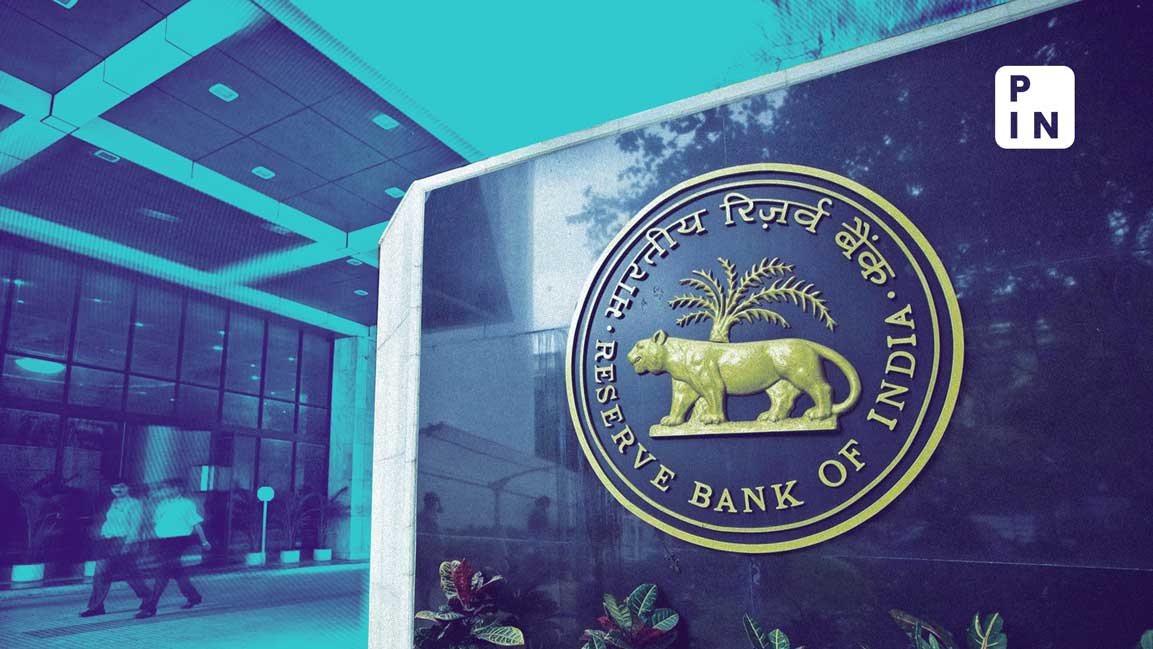


India’s central bank held interest rates steady on Friday and rolled out measures to attract foreign capital, choosing to defend the rupee through external-sector tools rather than a rate increase as higher oil prices, foreign outflows and the Middle East conflict cloud the inflation outlook.
The Monetary Policy Committee, led by Reserve Bank of India (RBI) governor Sanjay Malhotra, voted unanimously to keep the policy repo rate unchanged at 5.25% and retained its neutral stance.
The standing deposit facility rate remains at 5%, while the marginal standing facility rate and the bank rate remain at 5.5%.
“Although risks of higher inflation have amplified, the MPC felt it would be prudent to wait,” Malhotra said, adding that the committee would remain “data dependent.”
The decision marks a shift from the easier macro backdrop that supported earlier policy comfort.
The RBI raised its inflation projection for 2026-27 to 5.1% from 4.6% and lowered its real GDP growth forecast to 6.6% from 6.9%, signaling that the central bank now sees a more difficult trade-off between growth and prices.
Malhotra said the global environment had worsened since the April policy review, with the Middle East conflict, energy prices and supply-chain disruptions feeding into the RBI’s revised assumptions.
“The economy at this point is relatively strong,” he said, while warning that policy would have to stay alert to imported price pressures.
The RBI now expects Consumer Price Index (CPI)-based inflation at 4.2% in the first quarter, 5.1% in the second, 5.9% in the third and 5.4% in the fourth quarter of 2026-27.
The central bank said the projections are exposed to upside risks from commodity prices, global supply-chain disruption, the distribution of the southwest monsoon and possible El Niño conditions.
Growth is projected at 6.6% in the first quarter, 6.3% in the second, 6.5% in the third and 6.8% in the fourth.
The cut reflects the drag from elevated energy prices, higher import costs, financial-market volatility and weather-related uncertainty, even as services, manufacturing and private consumption remain sources of support.
Alongside the rate decision, the RBI announced measures to draw foreign inflows and deepen debt-market participation. These include expanding the Fully Accessible Route for government securities to new 15-year, 30-year and 40-year bonds, easing concentration limits and increasing the room for overseas participation in Indian listed equities.
The central bank also announced concessional forex swap facilities and support for banks raising foreign currency non-resident deposits, while restoring the export-realization period to nine months.
The government separately moved to scrap capital gains tax for foreign holders of government bonds and remove the 20% tax on interest earned from such investments, effective 1 April 2026.
Malhotra sought to draw a line between managing volatility and defending a particular exchange-rate level.
“We do not target any specific level or band,” he said, adding that the RBI would curb “excessive volatility” and disorderly market moves.
The rupee strengthened after the announcements, rising to about 95.24 against the dollar from 95.67 before the policy outcome.
The currency has been under pressure this year as higher oil prices, equity outflows and geopolitical risks have strained India’s external account.
Malhotra said the RBI expected “healthy flows” from the measures, without setting a dollar target.
Economists read the decision as a pause with a tightening bias rather than a sign of comfort.
Upasna Bhardwaj, chief economist at Kotak Mahindra Bank, said the RBI’s emphasis on “amplified risks” to inflation pointed to possible policy tightening later in the year.
“We expect 50 basis points of rate hike beginning in October,” she said. “On the positive side, the measures taken by the RBI to attract capital would help ease pressure on the Indian rupee.”
Aditi Nayar, chief economist at ICRA, said the timing of the next rate action would depend on the monsoon, agricultural output and whether inflation pressures spread beyond immediate supply shocks.
“The evolution of the monsoon rains, its impact on agri output and inflation, as well as any emerging signs of generalisation of inflationary pressures would drive the timing of the next rate action,” Nayar said. “As of now, we cannot rule out a rate hike in the third quarter of FY2027.”
Garima Kapoor, deputy head of research and economist at Elara Securities, said the case for rate increases could build in the second half of the fiscal year if inflation concerns become more entrenched.
“As inflation concerns get entrenched, the case for rate hike develops towards second half of FY2027,” Kapoor said.
More Top Stories: