- | 4:00 pm
Trump signals India-US trade deal is on
Trump's remarks on India-US trade deal in Gyeongju come as he meets China's Xi Jinping in Busan and flags tariff cuts soybeans and fentanyl action
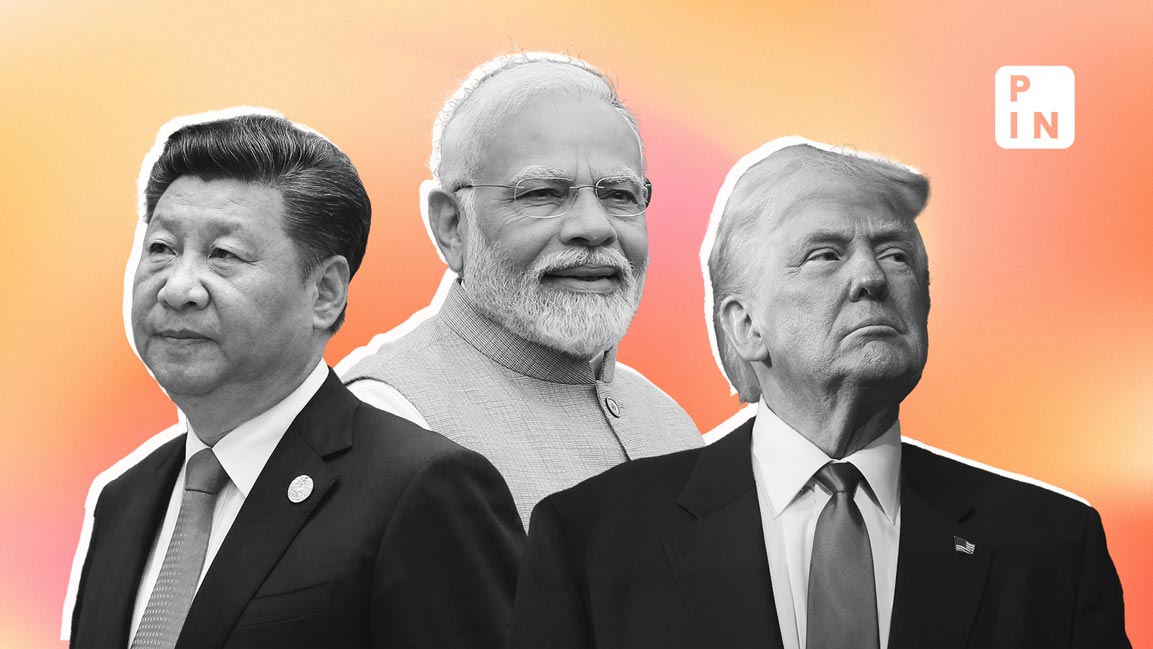


US President Donald Trump said this week that a trade deal with India is “on,” using a speech to business leaders in Gyeongju to signal that Washington and New Delhi are moving toward an agreement even as neither side has put terms or a timetable on paper.
Trump made the remarks on Wednesday, 29 October, at the APEC CEO Summit, which is being held alongside APEC leaders’ meetings in the South Korean city.
Trump’s line on India came as he courted Asian investors and praised Prime Minister Narendra Modi in the clearest public hint in recent weeks that the administration wants to notch a bilateral outcome with New Delhi after months of tariff skirmishes and sector-specific talks.
Trump said he has great respect for Modi and signaled that a trade deal with India is imminent.
“Going to do a trade deal with India,” he said while speaking on the sidelines of the Gyeongju summit.
During his speech, Trump called Modi the “nicest looking guy” and “like a father”, and added that he is a “killer in negotiations,” and “tough as hell,” and quickly reiterated that it was he who forced both India and Pakistan to call off the conflict by using a trade deal as a bone of contention.
He claimed, “I called Prime Minister Modi,” and said, “We can’t make a trade deal with you. (Modi said) No, no we must make a trade. I said, No we can’t. You are starting war with Pakistan. We’re not going to do it.”
Trump also said he called Pakistan and told them that he is not going to do trade with them because they are fighting with India. He said that both are nuclear nations, but Pakistan also insisted on letting them fight with India. Trump said after just two days, both countries called him and said, “they stopped fighting.”
Meanwhile, a day later on Thursday, Trump met China’s Xi Jinping in Busan for roughly 100 minutes, announcing a limited package aimed at cooling some trade friction.
Trump said the US would lower the average tariff rate on Chinese goods to about 47% from roughly 57% and would cut a fentanyl-linked levy on certain chemical imports to 10%.
In return, he said Beijing would resume large US soybean purchases, keep rare-earth exports flowing for at least a year, and step up actions against illicit fentanyl.
Beijing had not immediately issued matching specifics.
Think tank Global Trade Research Initiative (GTRI) founder Ajay Srivastava said that the agreement reflected Washington’s mounting concern over vulnerabilities in semiconductor and electronics production.
He said, “Rare-earth minerals are essential to chipmaking and clean-energy technologies, areas where Chinese dominance leaves the US exposed.”
Reflecting on Beijing’s stance, Srivastava said, “Beijing, however, understands that America’s dependence extends far beyond rare-earths—to green-energy inputs, pharmaceutical ingredients (APIs), and mass-market consumer goods—giving China multiple levers of influence even after tariff cuts.”
Presenting data that proves how US tariffs have failed to dent China, GTRI stated that China’s exports to the US rose from $28.8 billion in May 2025 to $34.3 billion in September 2025, underscoring the limited impact of US tariffs.
Weak domestic manufacturing and persistent Chinese cost advantages have kept American buyers reliant on Chinese supply, GTRI pointed out.
Srivastava added, by contrast, India’s exports to the US plunged 37% during the same period—from $8.8 billion to $5.5 billion—as other Asian suppliers with lower tariff exposure captured market share.
Meanwhile, Trump described the meeting as a success and said reciprocal leader visits are likely next year.
South Korea is hosting the APEC CEO Summit in Gyeongju from 28–31 October and the leaders’ meeting through 1 November, with Busan hosting side engagements.
The Trump-Xi sit-down was the first in-person session between the two since Trump returned to the White House.
On chips, Trump said Nvidia’s most advanced Blackwell products remain off-limits to China and that the Busan conversation did not cover approving those sales.
The stance keeps in place Washington’s tightest controls on cutting-edge accelerators while leaving room for discussion on less advanced parts. Bloomberg reported Thursday that Trump said Blackwell “wasn’t discussed.”
The India line matters because it suggests Washington is pursuing two parallel tracks in Asia: a closer trade understanding with New Delhi and a tactical de-escalation with Beijing focused on commodities and enforcement.
The Gyeongju remark was short on detail, but it gives Indian negotiators a public signal to point to as they weigh sensitive areas such as electronics duties, digital trade provisions, and market access for farm goods and medical devices.
The APEC setting underscores the choreography. Gyeongju is hosting the CEO Summit and leaders’ week, drawing more than a thousand executives and officials. South Korea has emphasized security and logistics around the venues and nearby cities, reflecting the presence of both Trump and Xi and the prospect of a busy corridor between Gyeongju and Busan for bilateral meetings.
Trump’s rhetoric elsewhere in Asia added noise. In Gyeongju, he again claimed personal credit for defusing India-Pakistan tensions earlier this year, saying he used tariff threats to force a pause.
India does not corroborate that account and has credited a ceasefire understanding reached directly between the two militaries.
For New Delhi, the focus now is whether a US deal can progress to scoping with clear guardrails that protect industrial policy aims while opening specific doors in services and goods.
More Top Stories: