- | 3:30 pm
From pomp and pageantry to power politics, can Trump and Xi forge a G2?
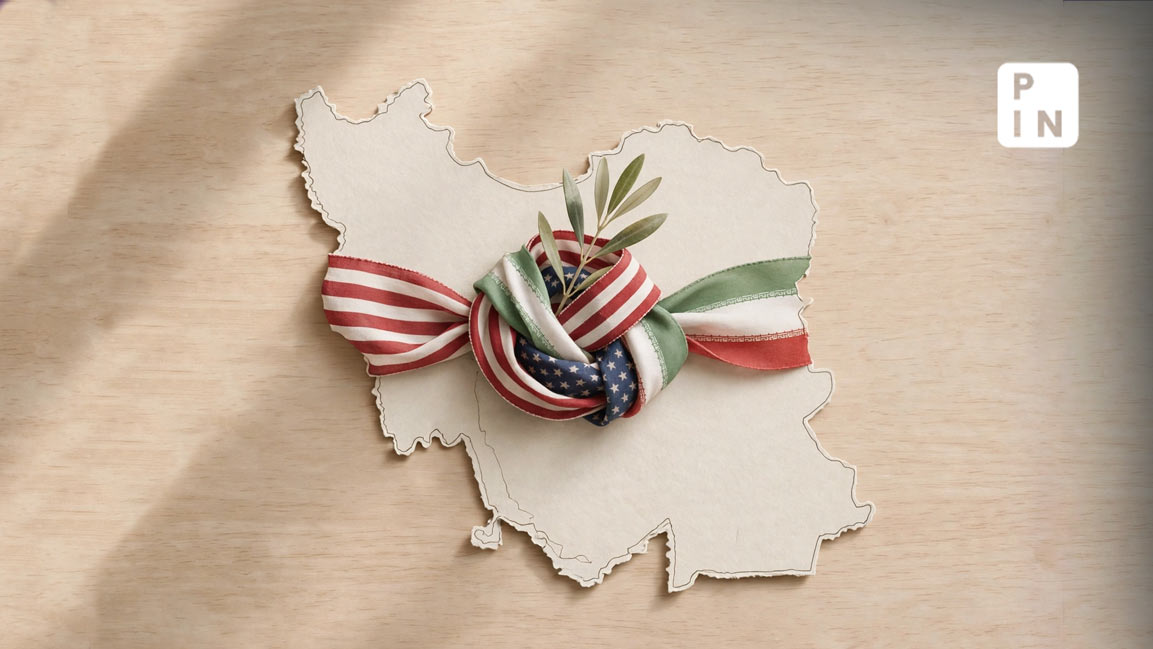
Trump’s elaborate welcome for Xi Jinping has revived questions about whether Washington and Beijing could forge a new strategic understanding, with far-reaching consequences for Taiwan, India and the wider world.
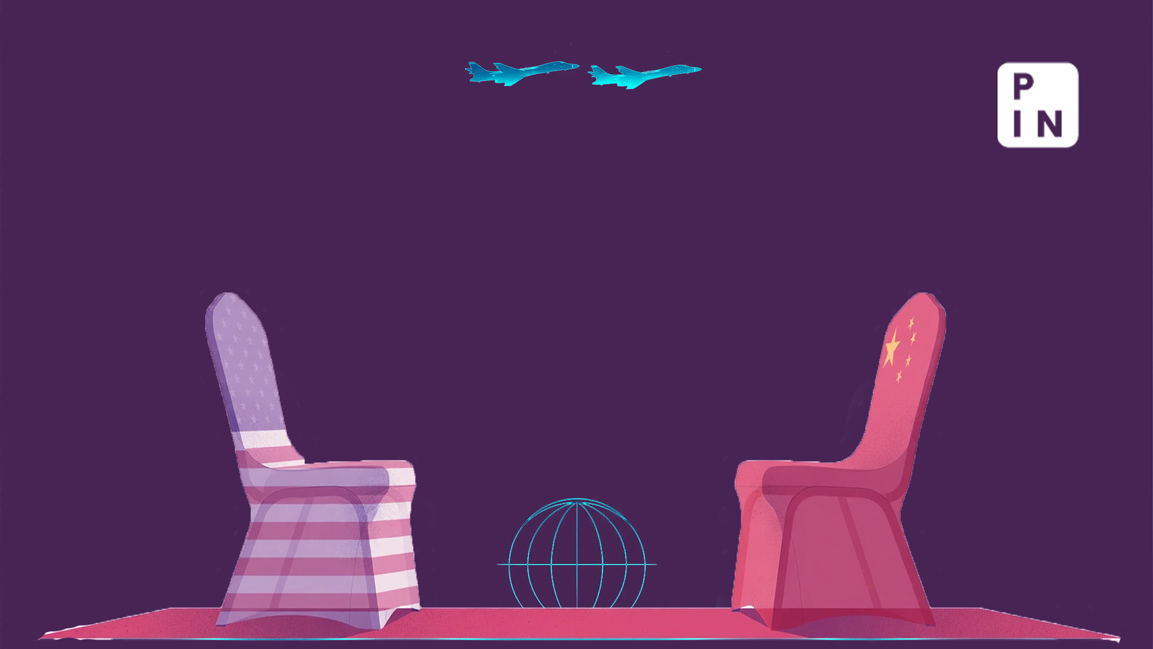


US President Donald Trump made it a point to extend a deferential welcome to his guest, Chinese President Xi Jinping. In a marked departure from normal protocol, Trump and Melania went to Joint Base Andrews in Maryland to receive Xi Jinping and his wife, Peng Liyuan, as two B-1 bombers flew overhead.
The BBC and others reported that the last time a US president had gone to the airport to receive a foreign leader was in 1962, when then president John F. Kennedy greeted then British prime minister Harold Macmillan. Then president Barack Obama had similarly received Pope Francis in 2015.
More tellingly, the Western media did not go further back in time to recall that former president Harry S. Truman had received then Indian prime minister Jawaharlal Nehru on 11 October 1949 at Washington National Airport. Moreover, they seemed to overlook the fact that Trump had extended the same honor to Russian President Vladimir Putin in Alaska in 2025.
Xi Jinping referred to the need for Washington and Beijing to avoid falling into a Thucydides Trap at the start of the visit, when the two leaders met at the White House. The reference was to the ancient Greek historian Thucydides, who reasoned that the 27-year war between Athens and Sparta arose from Sparta’s fear, as the established power, of the growing power of Athens.
At the state banquet, however, Xi Jinping took a milder tone, saying that talks with Trump during the visit had yielded “common understanding on many issues” and suggesting that the US and China find a new approach to working together.
“China and the United States must act as responsible major countries,” he said.
Recalling that China had sent diplomats to the US 158 years ago, Trump said:
“Tonight, we revive the spirit of that first encounter here on American soil as we are joined by some of the top leaders in business, culture and government from our own time. On one side, China draws on thousands of years of history and tradition from Sun Tzu to Sun Yat-sen. For Americans, we inherit a legacy of faith from Jerusalem to Rome, the democracy of ancient Athens, the triumphs of Sparta and the universal freedom proclaimed in Philadelphia 250 years ago.”
It is interesting, and even intriguing, that Trump should refer to “the triumphs of Sparta” and the freedom proclaimed in Philadelphia in the same sentence.
Sparta was an oligarchy with a large population of helots (slaves) who had no political or even human rights. The Declaration of Independence holds as a self-evident truth that all men are created equal, with “unalienable Rights” to “Life, Liberty and the pursuit of Happiness.”
Digging deeper, we might understand why Trump mentioned Sparta. In the present context, the US occupies a position comparable to that of Sparta, which won the war.
Let us assume that Xi Jinping had figured this out. He might have recalled Sun Tzu’s famous dictum:
“To win one hundred victories in one hundred battles is not the acme of skill. To subdue the enemy without fighting is the acme of skill.”
The passage is from ‘The Art of War,’ traditionally dated to the fifth century BC.
The BBC and much of the Western media reported that the visit was devoid of concrete results despite the pomp and pageantry.
It is true that Trump attached considerable importance to establishing a personal relationship with Xi Jinping. However, we have reason to believe that there were concrete results.
For example, hours before the Chinese leader landed, the ceasefire in the tariff war, which was due to expire on 10 November, was extended by two months, until 10 January 2027.
Trump also made it clear that he had no intention of imposing a 100% tariff on China for importing oil from Russia. China is one of the largest buyers of Russian oil. This raises questions about whether Washington intends to treat China and other major importers of Russian oil on an equal footing.
After Xi Jinping’s visit, it was announced that the two sides had agreed on recommendations for reciprocal tariff reductions covering $30 billion worth of goods in each direction.
China also sent two giant pandas, male Ping Ping and female Fu Shuang, to Zoo Atlanta. The animals arrived on 27 September under a conservation cooperation agreement.
Did the media conclude that there was no concrete outcome because their wish became father to their thought?
We should also take note that the two leaders are again likely to meet twice shortly: at the Asia-Pacific Economic Cooperation (APEC) Economic Leaders’ Meeting in Shenzhen, China, on 18 and 19 November, and then at the G20 summit on 14 and 15 December at Trump National Doral Miami in Florida.
There is, therefore, enough time for senior officials to work out agreements and submit them to the leaders.
The key question is whether the two leaders have decided to establish a G2 between them.
What is more important than the pomp and pageantry is that Trump was deferential to his guest throughout the visit. There was no fireside chat with journalists, as China had made it clear that it did not want one.
For China, the goal is to become the geopolitical equal of the US and eventually overtake it. China is in no hurry and is both able and willing to pursue a long-term strategy.
A G2 could imply that if China absorbs Taiwan, with or without military action, Trump might choose not to oppose it.
The proposed $14 billion US arms package for Taiwan, which has been held up, could be used by Trump as a negotiating chip. We did not hear anything about a delivery date.
Xi Jinping has been categorical on this matter, as Taiwan is, for him, the most important issue to be settled between the two countries.
What would be the implications for the rest of the world should a G2 emerge?
The European Union, despite being an economic giant, would remain a minor geopolitical player.
If Washington and Beijing were to frame rules governing artificial intelligence (AI), renamed “super intelligence” (SI) by Trump, the rest of the world would have to comply.
As of now, the chances of Washington and Beijing agreeing on such rules are rather slim. The US is ahead, and China fears that regulation could stand in the way of its catching up.
Incidentally, Trump has favored a light-touch approach to AI regulation. His reluctance to impose binding safeguards is scientifically questionable, given the risks associated with the technology.
Coming to the implications for India, any G2 would hurt India.
Its belief that Washington intends to confront China through the Quad might prove to be a delusion.
In this context, let us recall Obama’s visit to China in 2009, when the joint communiqué stated that the two powers were ready to “strengthen communication, dialogue and cooperation on issues related to South Asia and work together to promote peace, stability and development in that region.”
That caused considerable discomfort in New Delhi.
New Delhi is now figuring out how to distribute the many eggs it had placed in the American basket.
The interim trade deal is still hanging fire, and New Delhi has been unwilling or unable to hold talks at the summit level to reach a settlement.
More Top Stories: